RoWorld Ports, Warships, and Boat Landings
Separate trade Ports, troop transports, and Warship supremacy before you cross an ocean.
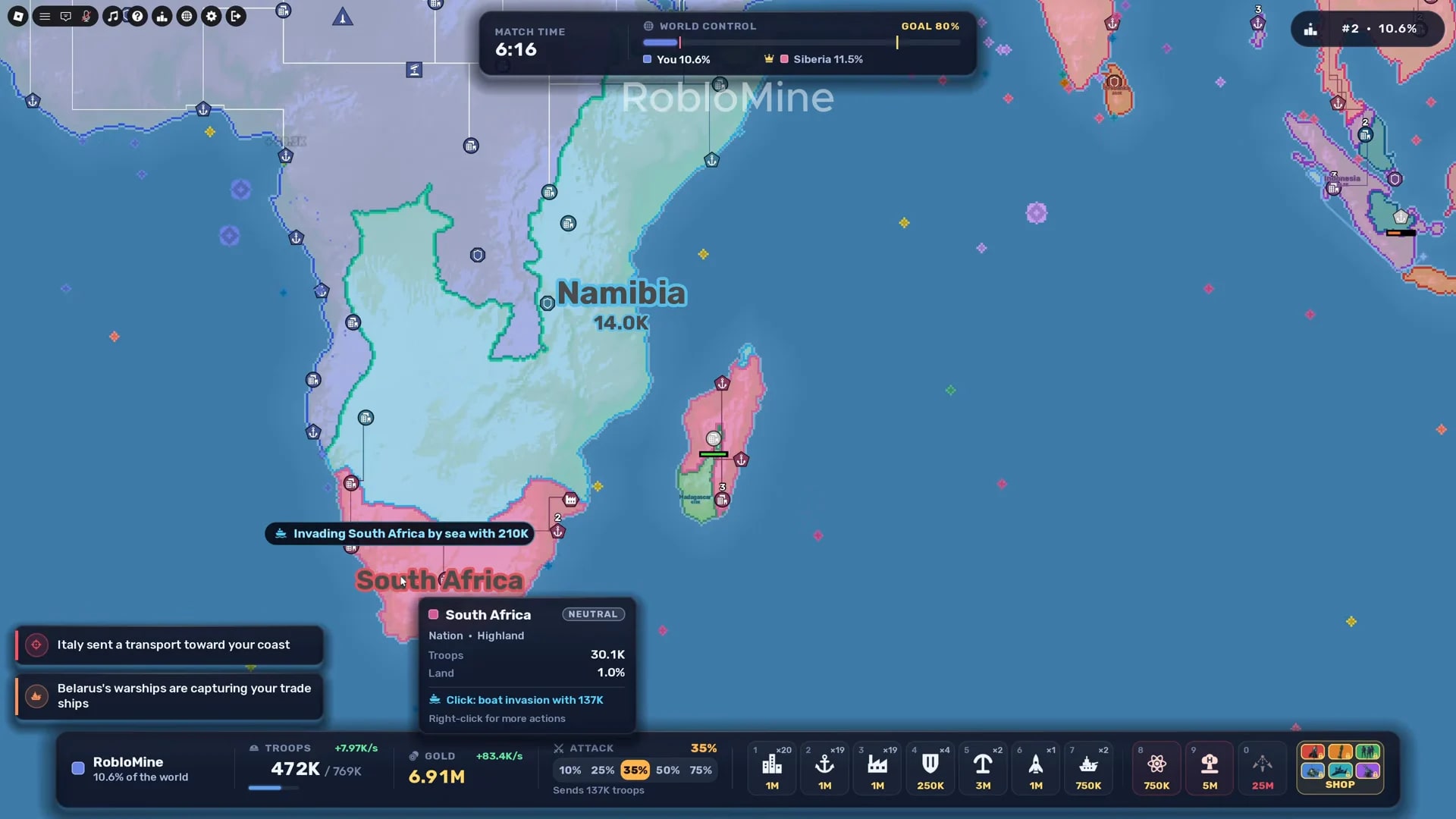
Naval play decides World-map matches that land armies cannot finish. This guide separates three systems players mash together: Ports (coastal buildings that unlock trade and shipyards), troop boats / transports (amphibious landings you launch from a coast), and Warships (armed ships that sink transports, fight fleets, and seize trade). Read it with Buildings & Economy for Port costs and Map Spawns for coast versus inland capitals.
RoWorld [World PvP] (formerly RoFront) is free Roblox multiplayer. On a full globe board, the last 80% World Control often sits across water. If you treat every coastal click the same, enemy Warships delete your invasion for free.
Ports first: trade income and ship access
A Port must sit on a coastal tile. Observed starting costs land near other mid buildings (community tables often show ~125k and climb with upgrades — always trust the live tooltip). Ports do three jobs:
- Trade routes — merchant traffic that prints gold when routes stay open.
- Warship production — you order Warships through the coastal / Port system, not from an inland City.
- Staging for overseas ops — a Port-heavy coast is where your navy and embark points live.
Build a Port when you already have a quiet land pocket and a shoreline you can defend. Building Port before a City or Factory on a dry inland spawn is a common gold sink — water adjacency is not optional.
Placement tips:
- Prefer coasts that face the ocean you actually need to cross later.
- Keep a Defense Post covering the Port tile cluster; a boat landing next to an unprotected Port ends your trade income.
- Factory networks still want inland connectivity; a Port on a dead-end peninsula with no Cities nearby underperforms.
Troop boats are not Warships
Left-clicking a distant enemy or empty coast (with enough troops and a sea path) launches an amphibious transport. That boat carries the attack-ratio slice you committed. It is not a Warship:
- Transports die to enemy Warships patrolling the lane.
- High ratio (50%+) on a contested sea is how beginners donate their army to the ocean.
- Coachable habit: send ~10–15% probes first, confirm the lane is clear, then commit.
Before you embark:
- Scout whether the destination coast is empty, tribal, or human-held.
- Check for red Warship silhouettes / labels if your client shows them.
- Hold a land reserve — never boat your entire bar while a neighbour shares a land border.
Cancel habits from Controls still apply on land; at sea, the fix is usually Warship cover or a different landing beach, not spam clicking the same doomed route.
Warships: jobs before hulls
Warships (observed ~250k and up as you stack them) patrol, sink transports, duel other Warships, and can capture nearby trade ships. Give every hull a job before you buy:
| Job | When it matters |
|---|---|
| Transport interception | Rival keeps landing on your coast |
| Trade raiding | You want to cut their Port income |
| Sea lane escort | You are about to invade and need the path cleared |
| Strait lock | A narrow channel funnels every boat past one tile |
Click a Warship and send it to the lane that matches the job. Idle fleets hugging your home Port while the enemy lands two continents away are wasted gold.
Counter-play:
- If your boats keep dying, stop sending until you either clear their Warships or land elsewhere.
- You can pressure Warships with naval fights or, when nukes exist, with carefully chosen strikes — but silo gold is usually better spent on the land race unless the fleet truly gates 80%.
- Allied coasts still need your own picket if Traitor windows are common; see Alliances.
World map versus regional maps
On World-scale boards, Ports and Warships are mid-to-late staples because leftover continents sit overseas. On tight regional maps, a single Port may be enough and excess Warships steal Factory timing. Match the navy to the board you queued — Map Spawns explains the tradeoff.
Island starts look clever until you realise every expansion is a boat. Bring Port timing forward, keep Warship pickets, and accept slower City counts unless trade is printing hard.
Naval checklist toward World Control
- City / Factory foundation on land before Port vanity (Tier List).
- One defended Port on the ocean you must cross.
- Probe boats at low ratio; commit only on clear lanes.
- Warships with named jobs — intercept, raid, escort, or lock.
- Land the army, plant Defense Posts, resume the percentage race in How to Win.
Sea control is a tool for the 80% land goal. The player who owns the strait and still builds Cities beats the player who owns twenty idle Warships and 40% control.
Frequently Asked Questions
Quick answers to the most common RoWorld questions.
What does a Port do in RoWorld?
A coastal Port enables trade income, Warship construction, and a staging point for overseas play. It must sit on a coast tile — check the live gold tooltip for the current price.
Are troop boats the same as Warships?
No. Troop boats / transports carry your amphibious attack. Warships are armed ships that sink transports, fight fleets, and can seize trade ships.
Why do my naval invasions keep failing?
Enemy Warships likely cover the lane, or you committed too high a troop ratio. Probe at ~10–15%, clear or avoid their fleet, then land.
When should I buy Warships?
When a sea job exists: stop landings on your coast, raid trade, escort your own invasion, or lock a strait. Do not buy hulls before your land economy can fund them.
Do I need Ports on every map?
World maps usually need them for leftover continents. Tiny regional maps may only need one Port — Factories and Cities still decide most inland games.
Can Warships capture trade ships?
Yes. Community guides and gameplay consistently show Warships interfering with merchant traffic near contested waters — use that to cut rival Port income.